

(Wow. That picture is terrible. I’m still getting used to my new camera, which I am beginning to suspect might indeed suck. And the wall is kind of gunky looking. I’m such a pro.)
Read more: The Best Reheated Mac and CheeseI can’t stop making macaroni and cheese. I’ve made it probably eight times? over the last two weeks. I make it when I’m experimenting. I make it when I’m bored. Sometimes I even make it when I’m hungry.
Inspiration? It was Chain Sandwich Restaurant mac and cheese, ordered on a particularly busy day at work. I was never even a mac and cheese kid, but that day I needed something soft and hot and comforting. Then I decided it’s all I ever wanted to eat again for the rest of my life. But at $6+ for a small order, I would be homeless in less than a year. And possibly get scurvy or rickets or some other pirate disease. But nobody wants to read yet another copycat restaurant recipe post, so let’s talk technique.
The test is not only to find an amazing mac and cheese recipe, but also find the best way to make it – that’s not only delicious, but reheats well – you know, without getting grainy or gloppy or too sticky. Cheese can be a fickle beast when heat it applied, so I’m trying three techniques, letting them cool, and microwaving to see what happens. I even have a special guest reviewer – my BFF from junior high volunteered to eat two pounds of pasta just to help out.
All three will be using the same cheese blend – predetermined through trial and error, here’s what I’ve decided on:
4 oz. Tillamook Extra Sharp Vintage White Cheddar
2 oz. sharp yellow cheddar (any brand)
2 oz. white American cheese (from the deli)
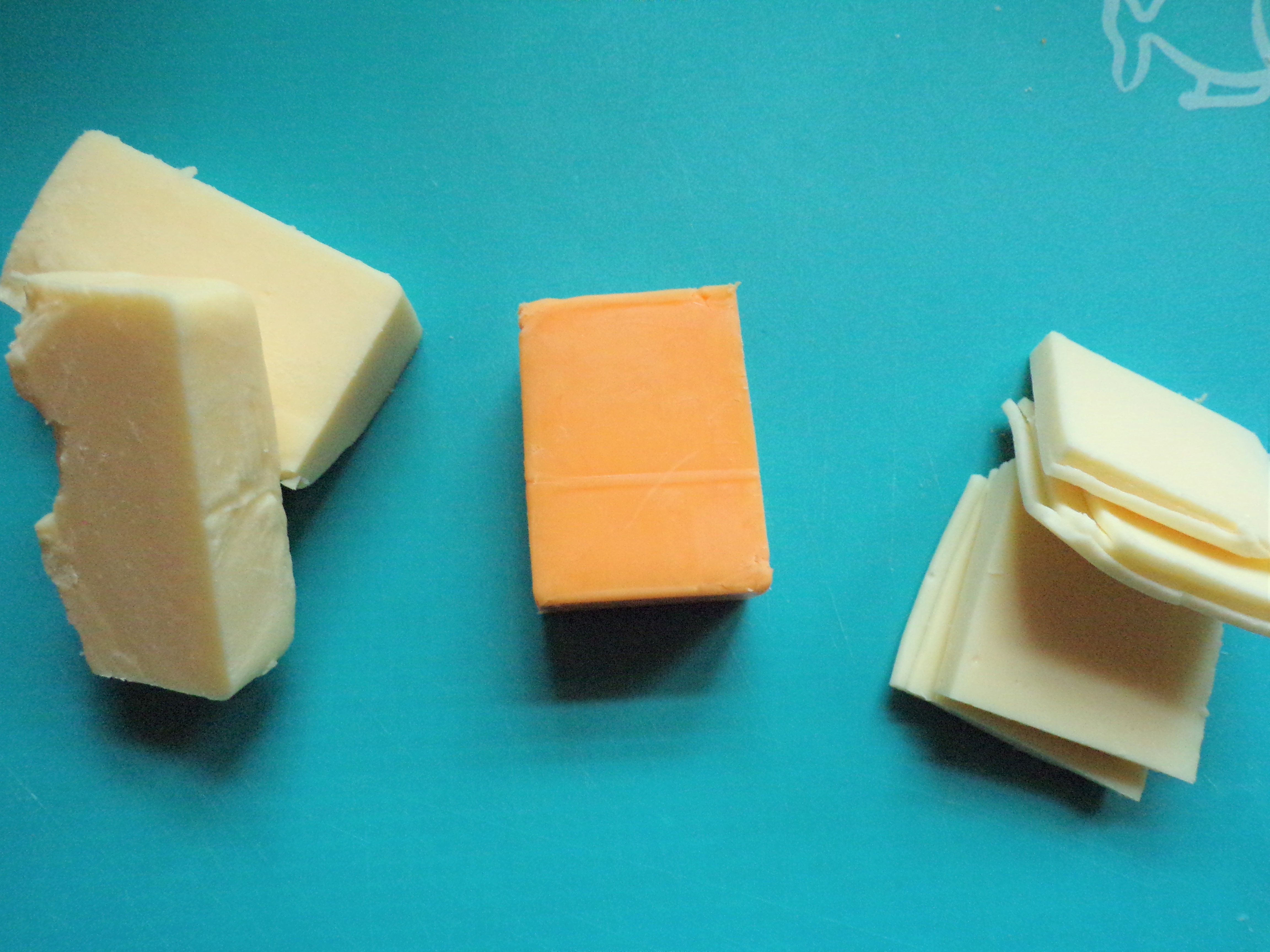
YMMV, but this is it for me. There is no substitute for Tillamook. If you simply must use a lesser cheese, I recommend Cracker Barrel, but it will suck ever so slightly. Cheddar is a finicky melter, and the American lends its silkiness and meltability. The keeps it from getting grainy and oily or separating. I believe I’ve already snottily held forth on how important grating your own is. Pre-grated is a no-no.
All three use 8 oz. of noodles – weighed dry. Your choice – I’ve tried conchiglie, elbows, shells, etc., but the Barilla elbows are my current favorite. They are ridged to grab more cheese sauce and a bit larger than standard elbows. All three also get ¼ tsp. of dry mustard powder, but this is not required.
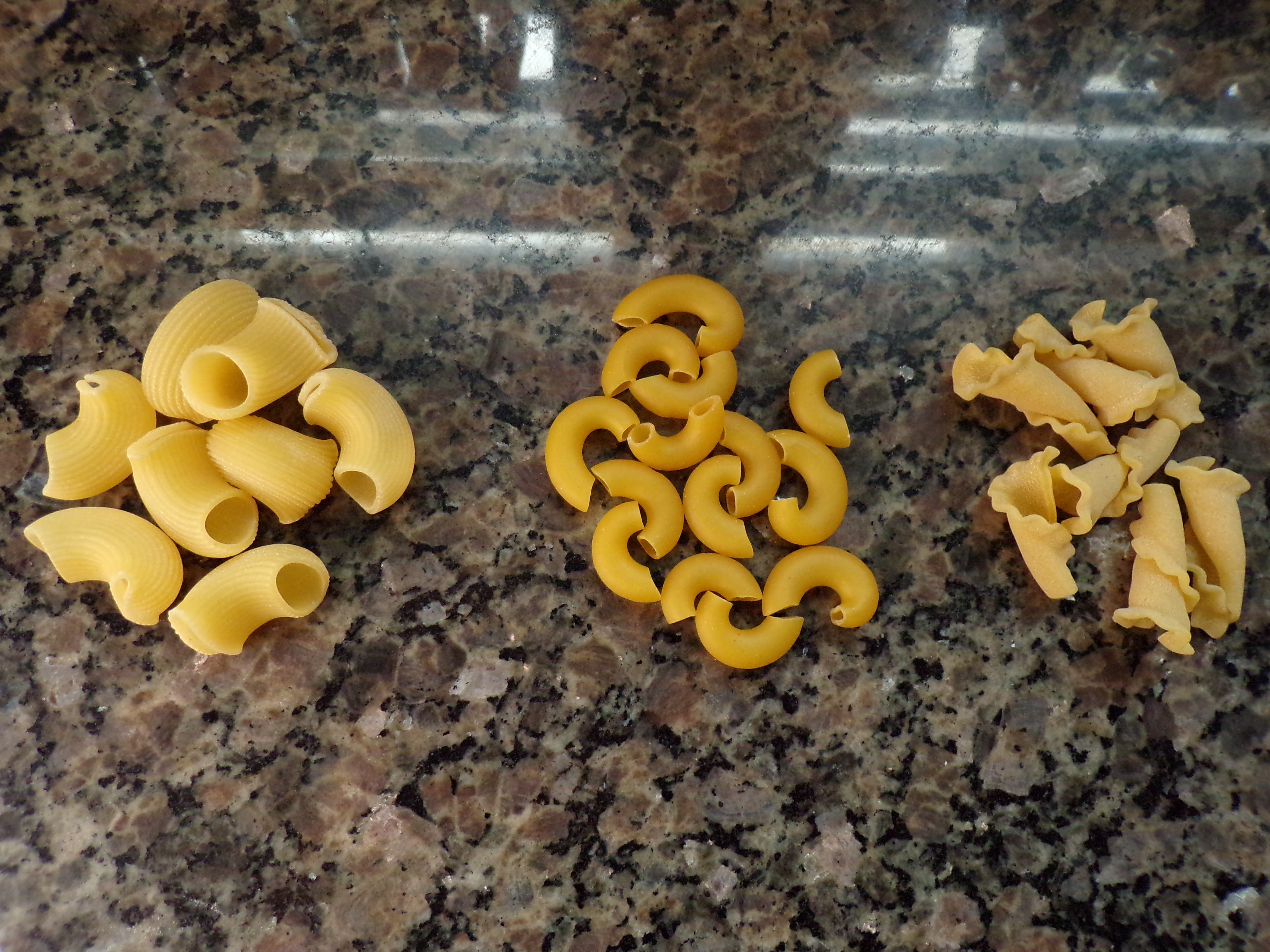
One: Traditional Roux Method –
This is the one you’ll see the most often. The roux, a mixture of equal parts fat and flour (in this case butter) serves as the thickening agent. Heated and stirred together until just starting to turn golden, 8 oz. of heated milk (whole) gets stirred in and brought to a simmer. The grated cheese gets added and whisked until smooth, then here come the noodles:

Two: Serious Eats Method –
Probably the easiest and quickest, J. Kenji Lopez-Alt’s recipe uses evaporated milk to thicken and emulsify the cheese sauce, and borrows some starch from the pasta water. The noodles are cooked in the bare minimum amount of water – just enough to cover them, and cooked to al dente. Eight ounces of evaporated milk are added at the end, then the cheese is vigorously stirred in. It takes a couple minutes, but it thickens up delightfully.
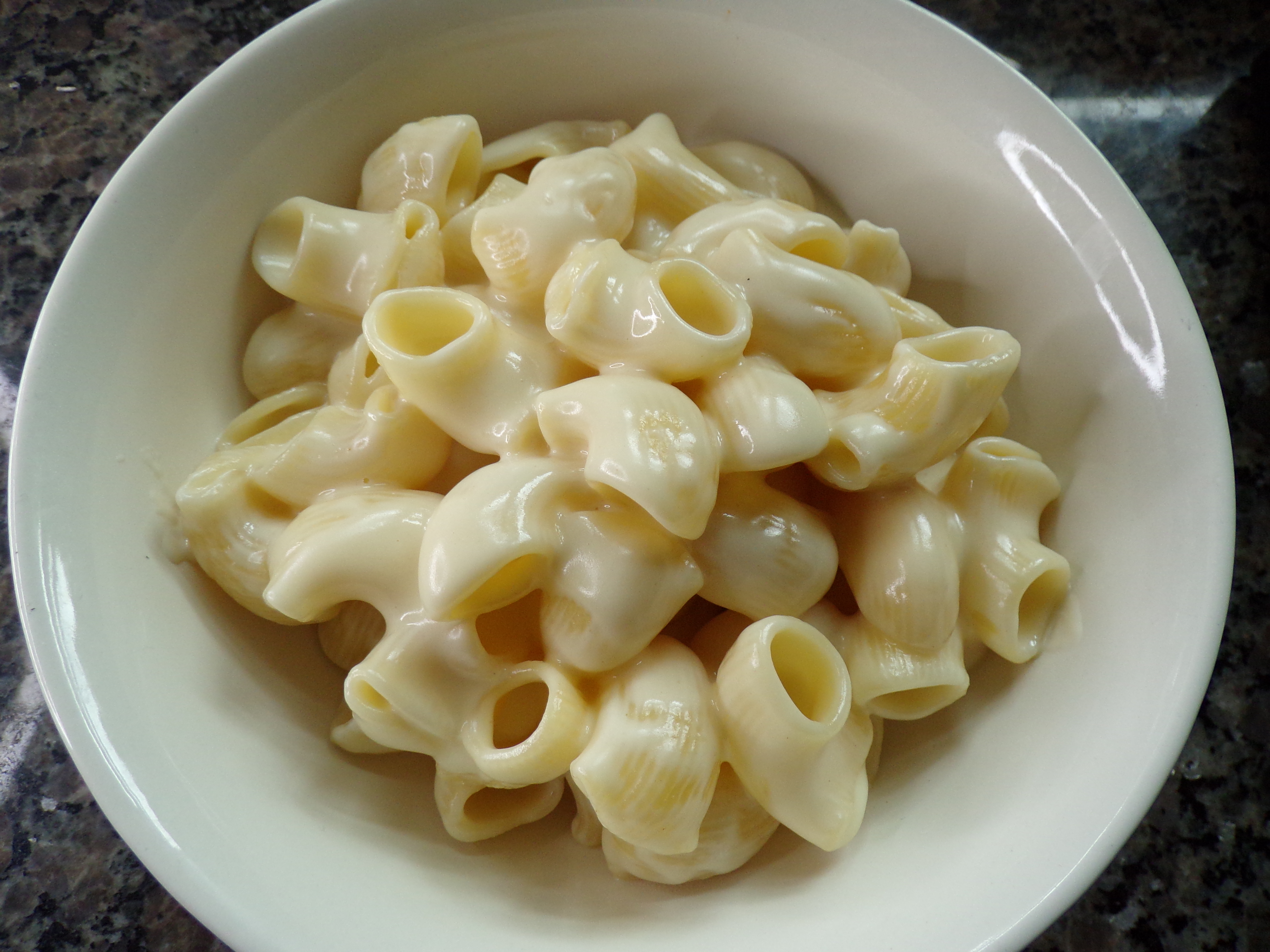
Three: Sodium Citrate –
This is a food-safe additive – not a scary chemical. It’s a sodium salt of citric acid, used to emulsify sauces and reduce acidity in foods. (Yay science!) It’s easily available online for around $10/lb. and a pound will last for years. Here the noodles are boiled separately. 8 oz. whole milk is brought to a simmer with one teaspoon of sodium citrate. Whisk well to make sure it dissolves. Really well, and for longer than seems reasonable. If it doesn’t dissolve completely, there can be unpleasant gritty bits. Whisk in cheese energetically, then add the noodles. It seems way too thin at first, but thickens as it starts to cool. Keep stirring.
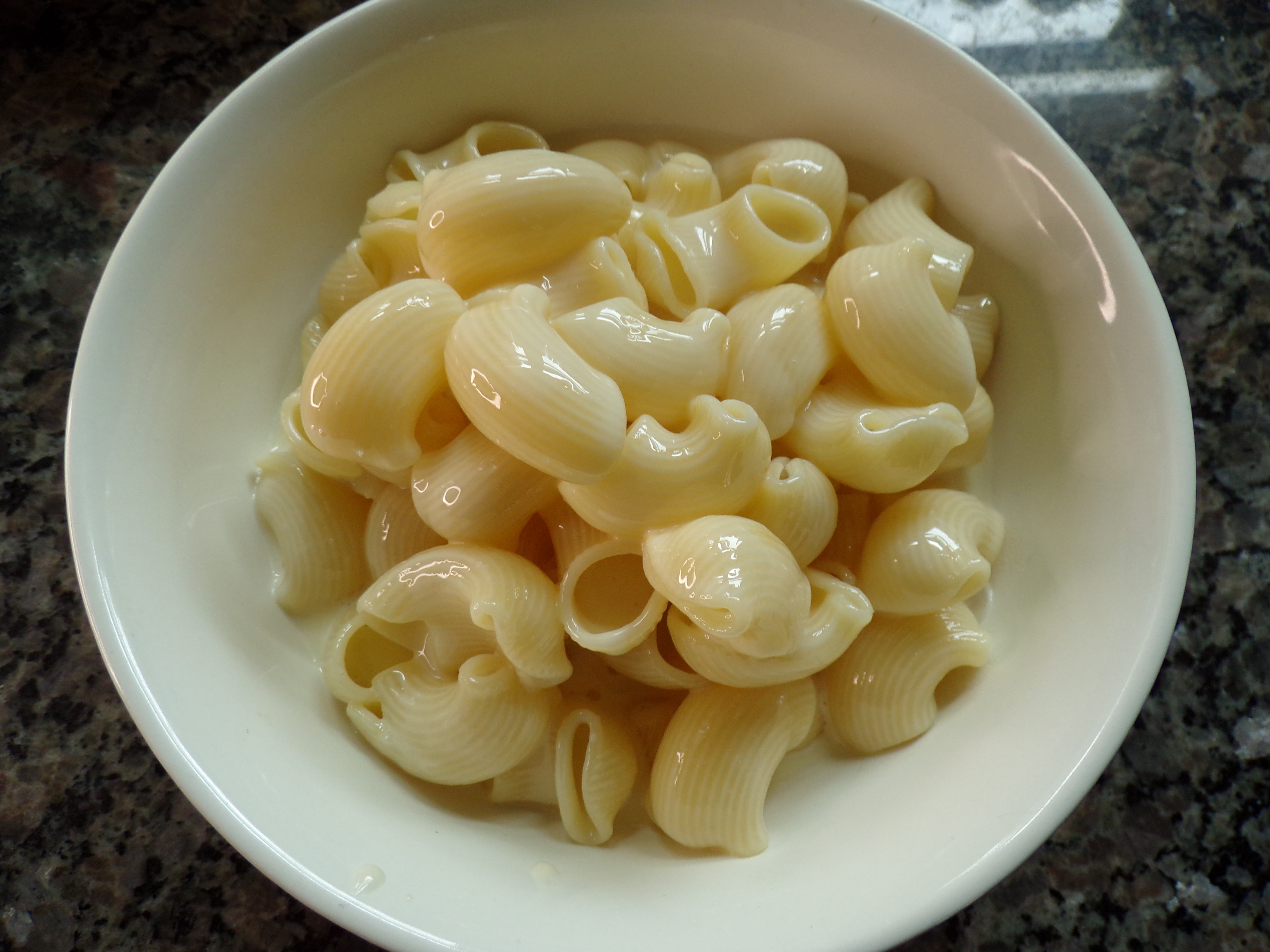
And wow. Three basically identical dishes that all taste the same. What an interesting blog I have written!
But.
The secret ingredient is time.
Once cooled and reheated, the differences are obvious.
The traditional roux tastes clumpy and floury once good and hot. The cheese flavor gets lost in the nooks and crannies of the clumps (more science!) Old Friend’s comment: “I honestly wasn’t real impressed” and “definitely didn’t reheat well”.
Serious Eats came in second with an impressive “wasn’t inedible”. It just gets gluey once it cools and doesn’t quite get creamy enough again. Somehow the flavor just flattens out and disappears. It feels weird to be negative about anything SE does – this is a great technique, but just doesn’t reheat well.
The clear winner is sodium citrate “impressively creamy and tasty” were the comments from my focus group of one, and I have to agree. It takes some stirring, but once heated evenly it’s almost as good as right out of the pot, which is usually when I begin eating it.
So with no further blathering on, here’s my ultimate mac and cheese recipe:
8 oz. dry noodles (dealer’s choice)
4 oz. Tillamook White Cheddar
2 oz. sharp yellow cheddar
2 oz. white American
¼ tsp. dry mustard powder
8 oz. whole milk
1 tsp. sodium citrate.
One last fun science-y fact – lots of nacho cheese sauces and queso recipes also make use of sodium citrate or sodium alginate to achieve a stable creamy sauce. Sodium alginate is why Velveeta melts so well. But sodium citrate’s molecular formula is…get this…
Na3C6H5O7
Yay science!

 illdothedisheslater
Is there directions to follow?
LikeLike
Yes – If you look above, you’ll see the steps and ingredients. Thanks for visiting my blog!
LikeLike
recipe?!?!
😘
LikeLiked by 1 person